
PARSVA KONASANA
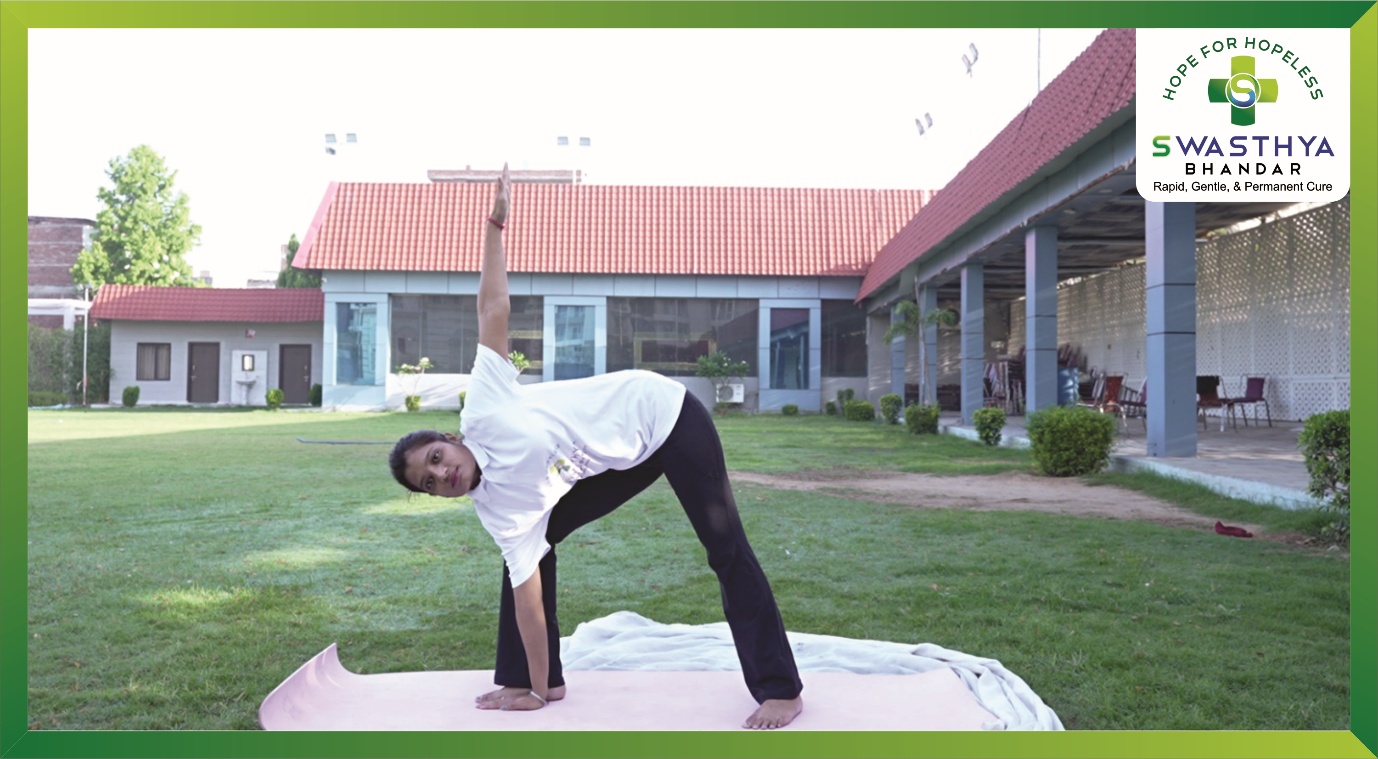
Method of Practice: Parsva Konasana
-
01
Stand upright on a yoga mat with your feet together and your arms relaxed by your sides. -
02
Step your feet 3–4 feet apart. Turn your right foot outward to 90° and your left foot inward to about 45°. Keep both heels aligned in a straight line. Maintain an erect spine and place your hands on your waist. -
03
Bend your right knee until it is directly above the right ankle, ensuring that the knee does not extend beyond the ankle. -
04
Raise both arms to shoulder level. Bend your trunk toward the right and place the right palm on the mat, inside and beside the right foot. -
05
Extend your left arm overhead with the palm initially facing upward and forward to deepen the stretch. Lean slightly further into the posture while keeping the chest open. Then rotate the left palm downward and look upward toward the left arm. Lift the chest slightly to create a comfortable stretch along the waist and the left side of the body. -
06
Hold the posture for a few comfortable breaths. -
07
Repeat the same sequence on the opposite side. -
08
Practice 3–4 rounds. To return, straighten the upper body and then straighten the bent knee before coming back to the starting position.
Benefits of Parsva Konasana
- Parsva Konasana is a powerful standing posture that strengthens the hips, waist, spine, legs, knees, and ankles.
- It improves flexibility of the hips and spine, enhances balance and endurance, and tones the muscles of the entire body.
- The posture also massages the abdominal organs, improves digestion and metabolism, and promotes better circulation.
Therapeutic / Supportive Uses For
- This asana is particularly beneficial for asthma, bronchitis and other respiratory disorders, disorders of the liver, kidneys and intestines, sciatica, low back pain, and digestive problems.
- It also serves as a supportive practice in the management of obesity, excess body fat, menstrual pain and cramps, mental stress, and fatigue.
Contraindication
- Do not practice this asana if you have hernia, or injuries to the knees, ankles, or spine, or if you suffer from spondylitis.
- If you have migraine, high blood pressure (hypertension), or heart disease, practice this asana only under the guidance of a Healthcare Professional or a certified yoga expert.
Need Expert Guidance?
Our yoga experts are here to help you practice correctly and safely for maximum benefits.
Book an Appointment