
TADASANA
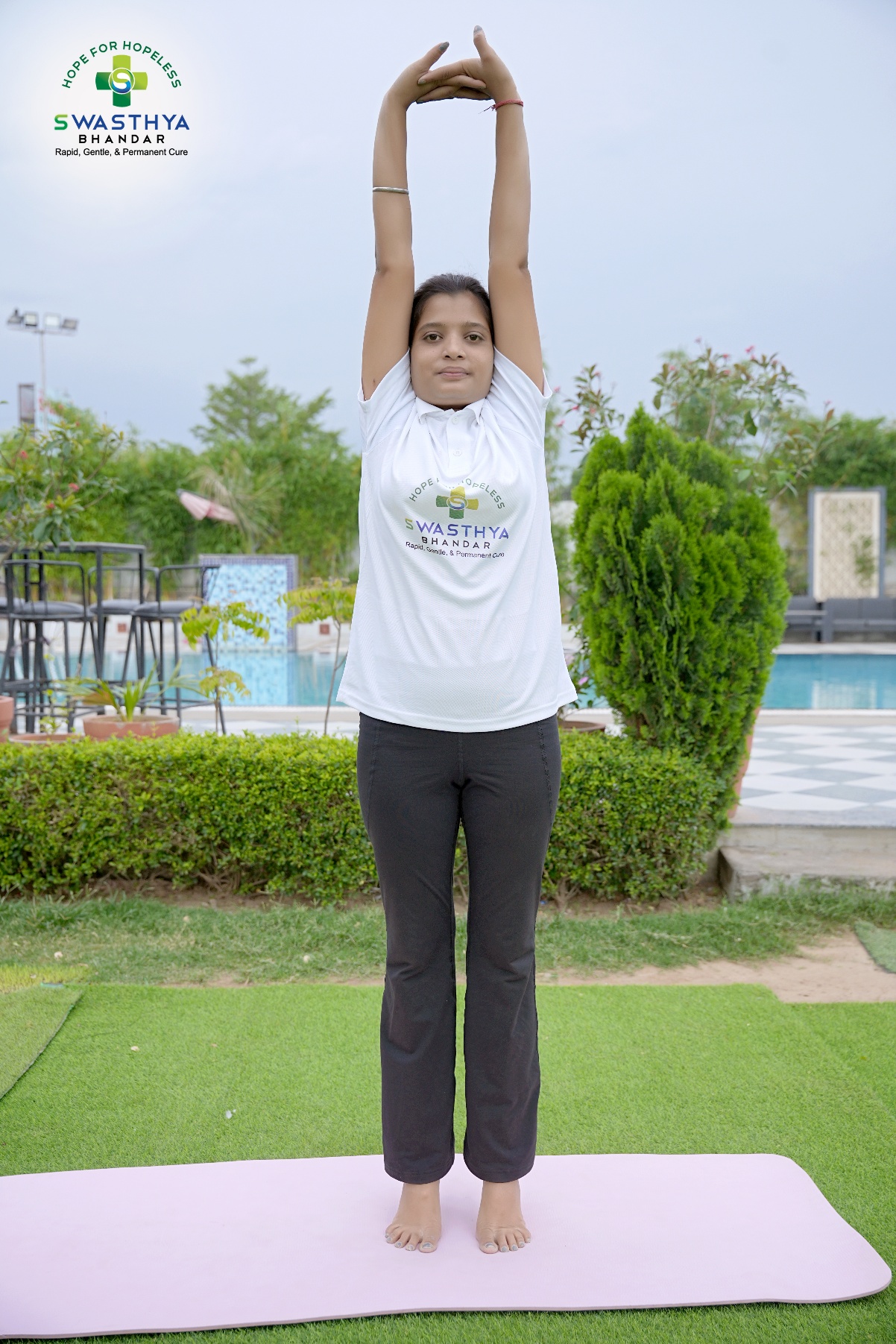
Method of Practice: Tadasana
-
01
Stand upright with your feet 3–4 inches apart, distributing your body weight evenly on both feet. -
02
Raise both arms overhead, interlock your fingers, and turn your palms upward so that they face the sky. -
03
Inhale and slowly raise your heels, balancing on the balls of your feet. -
04
Simultaneously, stretch your arms upward toward the ceiling, lengthening your entire body from your feet to your fingertips. Try to reach your maximum comfortable height without straining. -
05
Hold the posture for about 10 seconds, breathing normally. -
06
Exhale and slowly lower your heels and arms back to the starting position. -
07
This completes one round. Repeat 10 rounds.
Benefits of Tadasana
- Tadasana is the foundation of all standing yoga postures. It provides a gentle yet effective stretch to the entire body, particularly the spine, shoulders, arms, and legs.
- The posture improves body alignment, corrects posture, and enhances balance and stability.
- Regular practice helps elongate the spine, making it especially beneficial for children and adolescents during their growing years by promoting proper posture and optimal growth.
- It strengthens the feet, ankles, knees, and leg muscles, tones the abdominal muscles, improves breathing efficiency, and enhances overall body awareness.
- Tadasana also calms the mind, improves concentration, develops balance and coordination, and helps reduce stress and anxiety.
Therapeutic / Supportive Uses For
- This asana is particularly beneficial for scoliosis, kyphosis, spinal malalignment (poor spinal alignment), sciatica, lower back pain, flat feet, and promoting healthy growth in children and adolescents.
- It may also serve as a supportive practice in the management of COPD, asthma, Parkinson’s disease, mental stress, anxiety, digestive disorders, osteoarthritis, arthritis, heart disease, and poor blood circulation.
Contraindications
- Practice Tadasana only under the guidance of a physician or qualified yoga therapist if you have: Low blood pressure (hypotension)
- Frequent dizziness or vertigo
- Migraine
- Significant balance disorders
- Recent lower-limb injury or surgery
- If balancing on the toes is difficult, perform the posture with the heels on the floor or use a wall or chair for support until adequate balance is developed.
Need Expert Guidance?
Our yoga experts are here to help you practice correctly and safely for maximum benefits.
Book an Appointment