
UTKATASANA
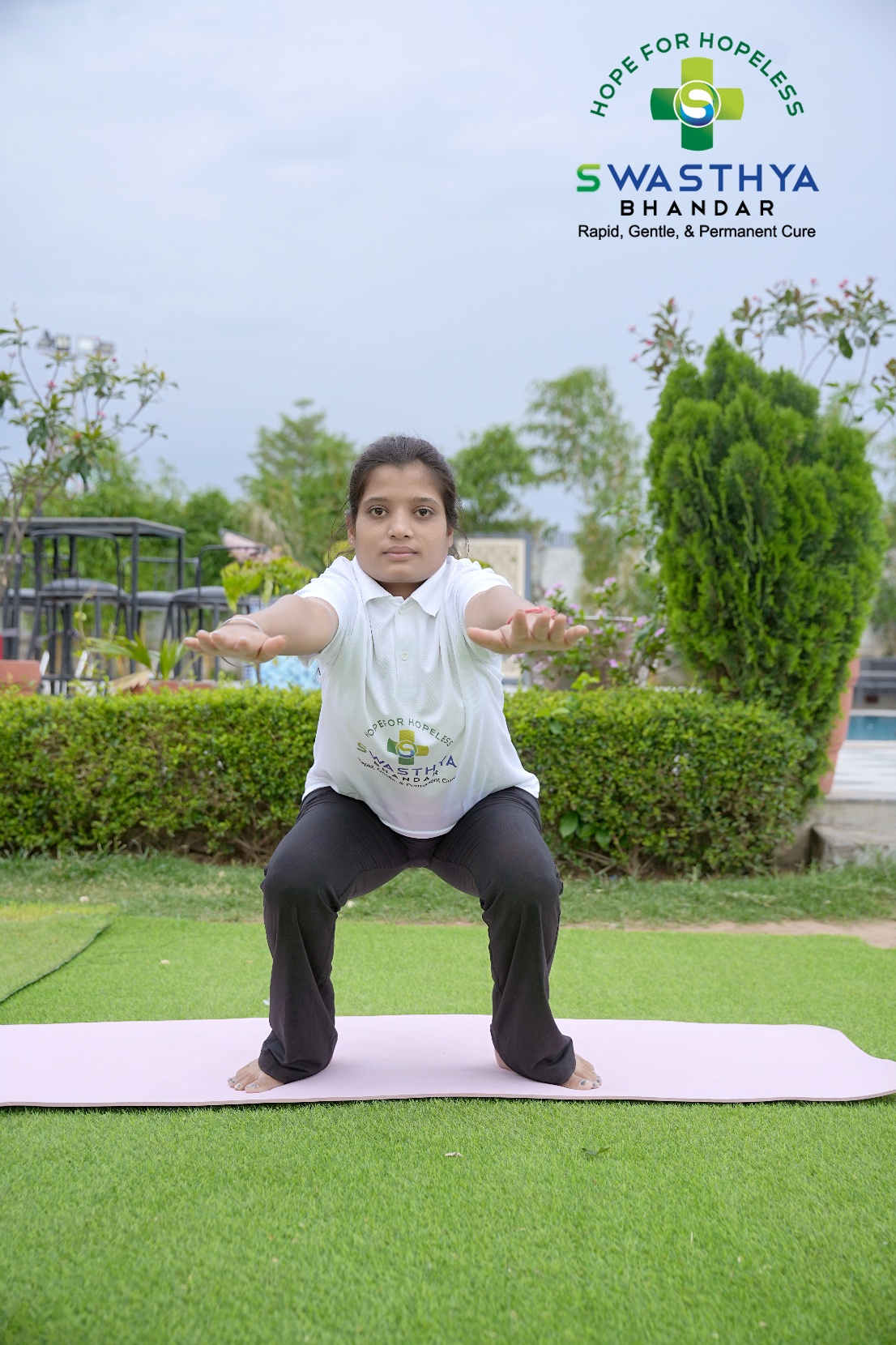
Method of Practice: Utkatasana
-
01
Stand upright with your feet slightly apart. -
02
Extend both arms forward at shoulder level with your palms facing downward. Keep your elbows straight. -
03
Exhale, bend your knees, and slowly lower your pelvis as if you were sitting on an imaginary chair. -
04
Keep your arms parallel to the floor. Sit upright with awareness, maintaining a straight spine and feeling a gentle stretch through your back. -
05
Ensure that your thighs are as close to parallel to the floor as your comfort and flexibility allow. Do not force the position. -
06
Hold the posture for a few seconds while breathing normally. -
07
Inhale and slowly return to the standing position. -
08
Repeat 10 times.
Benefits of Utkatasana
- Utkatasana is a powerful strengthening posture that tones and strengthens the ankles, calves, knees, thighs, hips, and core muscles. It improves lower-body endurance, enhances balance and stability, and promotes proper body alignment.
- The posture helps relieve stiffness in the back and shoulders, strengthens the muscles supporting the spine, and improves posture.
- It also stimulates the digestive organs, enhances circulation, and activates the cardiovascular system. Regular practice increases stamina, improves coordination, and promotes better overall physical fitness.
Therapeutic / Supportive Uses For
- This asana is particularly beneficial for flat feet, digestive disorders, weakness of the muscles and joints of the thighs, calves, ankles, and for correcting poor posture.
- It may also serve as a supportive practice in the management of obesity, improving lung function through increased cardiovascular activity, and enhancing insulin sensitivity.
Contraindications
- Avoid practicing Utkatasana if you have: Severe arthritis or acute inflammatory joint disease
- Severe knee pain or knee injury
- Ankle injury
- Acute lower back pain
- Recent surgery involving the hips, knees, ankles, or spine
- Individuals with chronic musculoskeletal disorders should practice only under the guidance of a healthcare professional or a qualified yoga therapist. Avoid squatting deeper than your comfort level, and discontinue the posture if you experience pain, instability, or dizziness. Top of Form
Need Expert Guidance?
Our yoga experts are here to help you practice correctly and safely for maximum benefits.
Book an Appointment