
ADHO MUKH SVANASANA
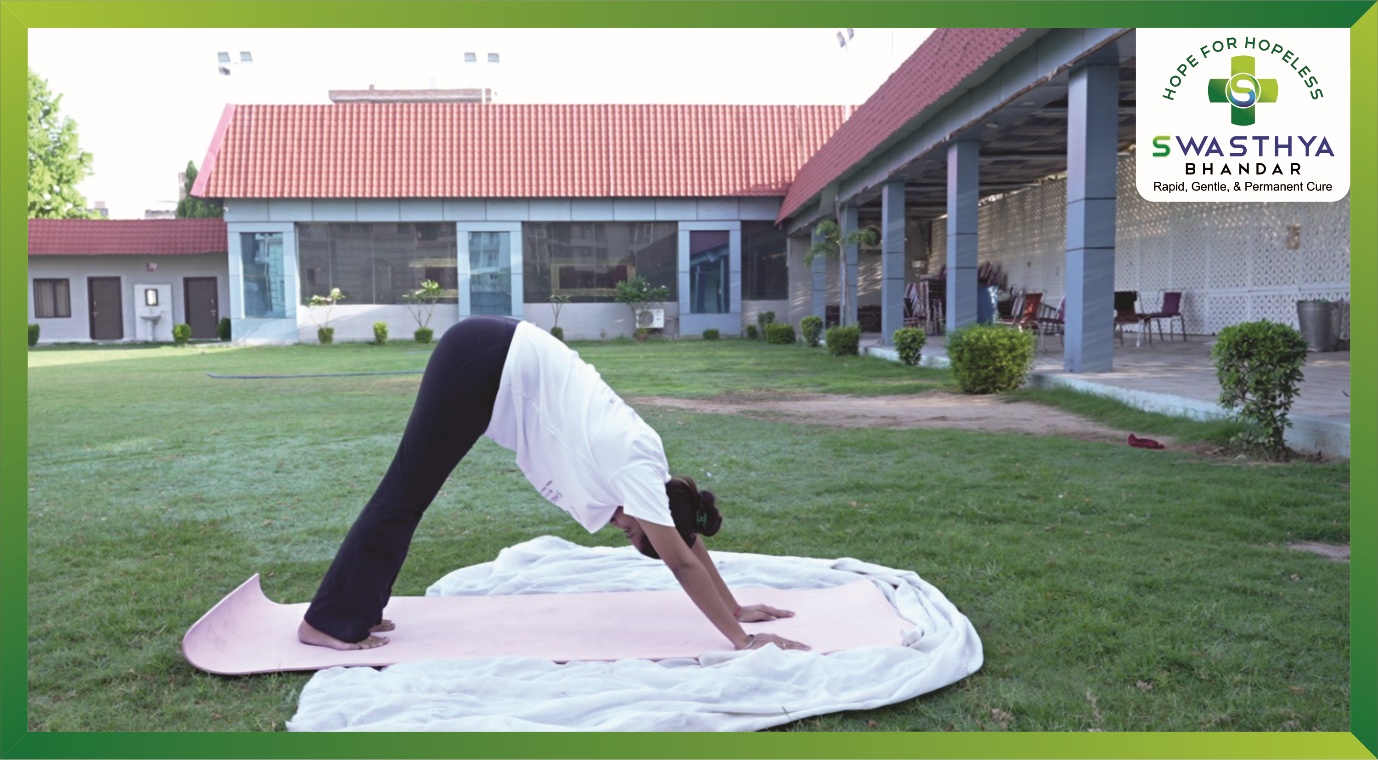
Method of Practice: Adho Mukha Svanasana (Downward-Facing Dog Pose)
-
01
Kneel on a yoga mat or a firm surface. Place both hands slightly forward and come into the tabletop position, with the knees directly below the hips and the palms directly beneath the shoulders. -
02
Exhale while lifting the knees off the floor and gently pushing the hips upward and backward. -
03
Straighten both the elbows and knees so that the body forms an inverted English letter “V”. -
04
Press the palms firmly into the mat and keep the heels resting on, or moving toward, the floor according to your flexibility. -
05
Keep the head and neck aligned between the arms and gently direct your gaze toward the navel. -
06
Hold this position for a few seconds while breathing normally. -
07
Exhale as you slowly lower the knees back to the floor and return to the starting position. -
08
Repeat 3–5 times.
Benefits of Adho Mukha Svanasana
- Strengthens and stretches the muscles: Provides an excellent stretch to the shoulders, armpits, hamstrings, calf muscles, and the muscles along the back of the body, while improving their strength and flexibility.
- Improves blood circulation: Since the head is positioned below the heart and the hips are elevated, blood flow to the brain is enhanced. This promotes mental calmness and may help relieve certain types of headache.
- Enhances digestion: The gentle effect of gravity and mild abdominal compression help stimulate the abdominal organs and support healthy digestion.
- Improves spinal alignment and posture.
- Relieves muscular tension in the shoulders, hamstrings, calves, and back.
- Increases flexibility of the entire posterior chain of the body.
- Refreshes the mind, reduces mental fatigue, and promotes relaxation.
Therapeutic / Supportive Uses For
- Mild lower back pain caused by muscular stiffness
- Tight hamstrings and calf muscles
- Migraine and tension-type headaches
- Rounded shoulders and poor posture
- Mild stress, anxiety, and mental fatigue
- As a supportive practice in the management of asthma and sinusitis
- Mild digestive disturbances
- Certain menstrual discomforts
- Flat feet (pes planus), by strengthening and stretching the muscles of the feet and legs
Contraindications / Precautions
- This posture should be avoided in the following conditions unless specifically advised by healthcare professional or a qualified yoga therapist:
- Uncontrolled or severe hypertension (high blood pressure)
- Acute or severe injuries of the shoulders, back, wrists, or ankles
- Serious eye disorders, including conditions associated with increased intraocular pressure
- Carpal Tunnel Syndrome
- Recent surgery involving the spine, shoulders, wrists, or abdomen
Practice Tips
- Keep the spine long rather than forcing the heels to touch the floor.
- Distribute the body weight evenly between the hands and feet.
- Avoid locking the knees or elbows.
- Breathe slowly and comfortably throughout the posture.
- If the hamstrings are tight, keep the knees slightly bent while maintaining a straight spine.
Need Expert Guidance?
Our yoga experts are here to help you practice correctly and safely for maximum benefits.
Book an Appointment