
KATI CHAKRASANA
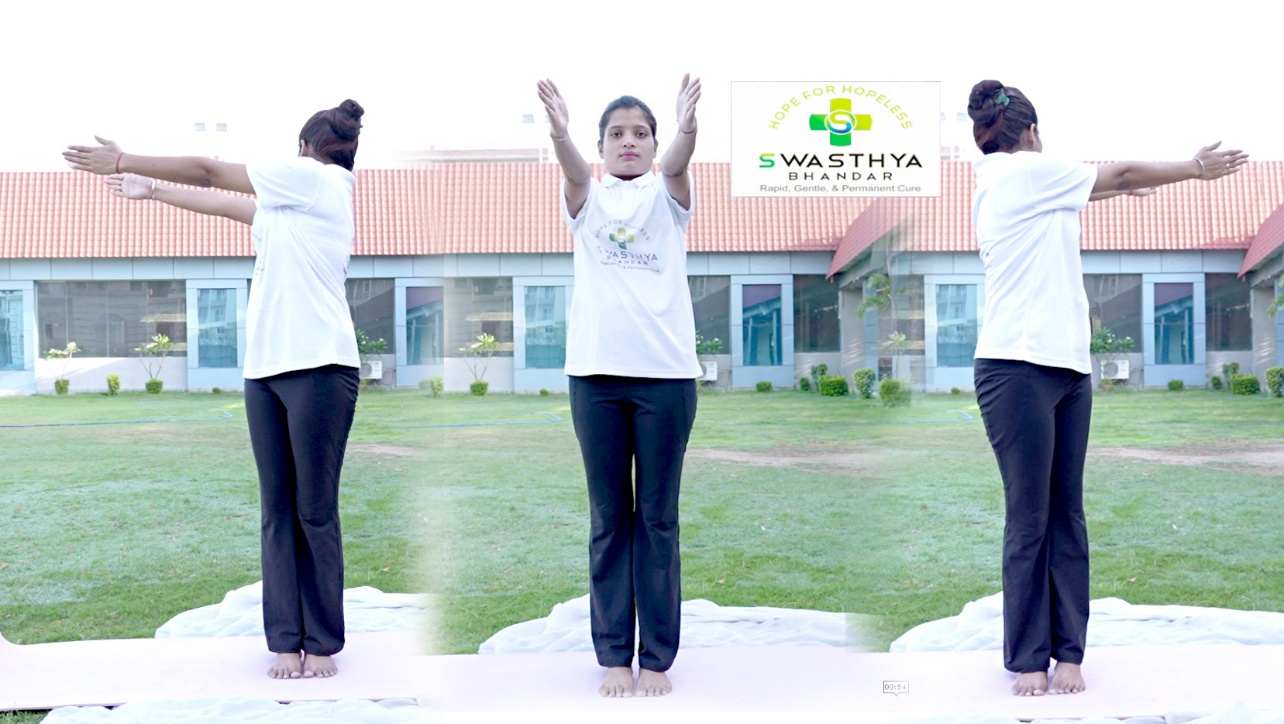
Method of Practice: Kati Chakrasana
-
01
Stand upright with both feet together, keeping your spine straight and your body well aligned. -
02
Inhale and extend both arms forward at shoulder level, keeping the palms facing each other and parallel to the floor. Maintain a distance between the palms equal to the width of your shoulders. -
03
Exhale and slowly twist your waist and trunk to the right. Turn your head and look over your right shoulder. -
04
Keep both feet firmly planted on the floor throughout the movement, and maintain the same distance between your palms. -
05
Inhale and return to the centre. -
06
Exhale and repeat the twist to the left side in the same manner. -
07
Inhale and return to the upright position. -
08
Repeat the movement a few times on both sides. -
09
Finally, exhale and lower both arms to your sides. -
10
Keep your entire body erect and avoid bending forward or backward throughout the practice.
Benefits of Kati Chakrasana
- Kati Chakrasana improves the flexibility and mobility of the spine, waist, shoulders, and trunk.
- It helps relieve constipation by gently massaging the abdominal organs and stimulates healthy digestion.
- The posture also strengthens the muscles of the back and abdomen and helps reduce excess fat around the waist.
Therapeutic / Supportive Uses For
- This asana is particularly beneficial for frozen shoulder, diabetes, low back pain, digestive disorders, and reducing abdominal and waist fat.
- It may also serve as a supportive practice in the management of respiratory disorders, sciatica, slipped disc (under expert supervision), stress, and anxiety.
Contraindications / Precautions
- Avoid practicing Kati Chakrasana if you have: Hernia
- Recent surgery (especially involving the abdomen, spine, or pelvis)
- Acute injury to the spine, cervical spine, or knees
- Severe slipped disc or acute sciatica (unless specifically advised by a qualified yoga therapist or physician)
- Severe osteoporosis or any condition where spinal twisting is contraindicated
- If you have chronic musculoskeletal or neurological disorders, practice this posture only under the guidance of a healthcare professional or qualified yoga instructor or.
Need Expert Guidance?
Our yoga experts are here to help you practice correctly and safely for maximum benefits.
Book an Appointment