
SETU BANDHASANA
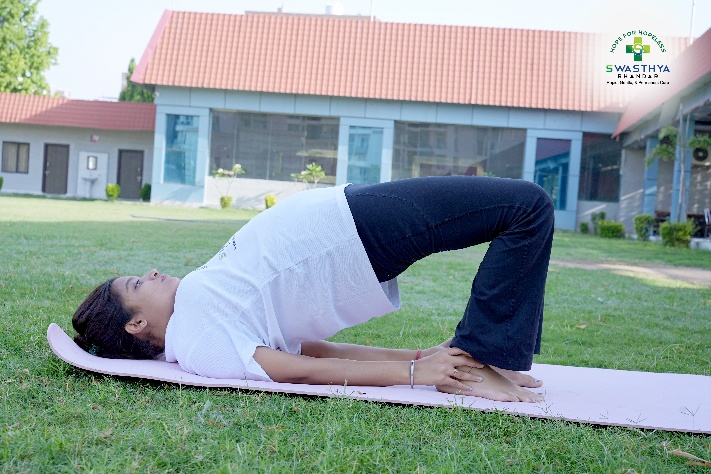
Method of Practice
- Lie flat on your back on a yoga mat or a firm surface.
- Bend your knees and place your feet hip-width apart, about 10–12 inches (25–30 cm) away from the pelvis. Keep your knees aligned directly over your heels.
- Rest your arms alongside your body with your palms facing down.
- As you inhale deeply, slowly lift your hips and back off the floor. Gently lift your chest toward your chin without forcing the chin downward. Your body weight should be supported primarily by your feet and shoulders.
- Keep both thighs parallel to each other and parallel to the floor. Feel the gentle contraction in your hips and gluteal muscles.
- If comfortable, interlock your fingers beneath your back and press your arms into the floor to lift your chest further. Alternatively, you may support your lower back with your hands.
- Breathe normally and remain relaxed while holding the posture.
- After holding the pose for a comfortable duration, exhale slowly and gently lower your spine back to the floor.
- Repeat 3–5 times.
Benefits of Setu Bandhasana (Bridge Pose)
- Increases the flexibility of the spine and strengthens the muscles of the lower back, hips, and thighs.
- Helps relieve back, hip, and thigh pain.
- Supports reproductive health.
- Improves digestion, helping relieve constipation and acidity.
- Enhances blood circulation, increasing energy levels.
- Helps reduce headaches, stress, anxiety, insomnia, and mild depression.
- Supports the healthy functioning of the thyroid and parathyroid glands.
- Expands the chest and improves lung capacity, making it beneficial for respiratory health.
Contraindications
Do not perform this pose if you have:
- A severe neck or spinal injury.
- A slipped (herniated) disc.
- Hernia.
If you have high blood pressure, practice this pose only under the guidance of a qualified physician or yoga expert.
Therapeutic / Supportive Uses For
- Particularly beneficial for thyroid imbalance, back and neck pain, mental stress, and depression.
- Also serves as a supportive practice for asthma and other respiratory disorders, digestive disorders, menstrual pain and cramps, menopausal symptoms, high blood pressure (with appropriate supervision), and osteoporosis.
Need Expert Guidance?
Our yoga experts are here to help you practice correctly and safely for maximum benefits.
Book an Appointment