
SURYA NAMASKAR
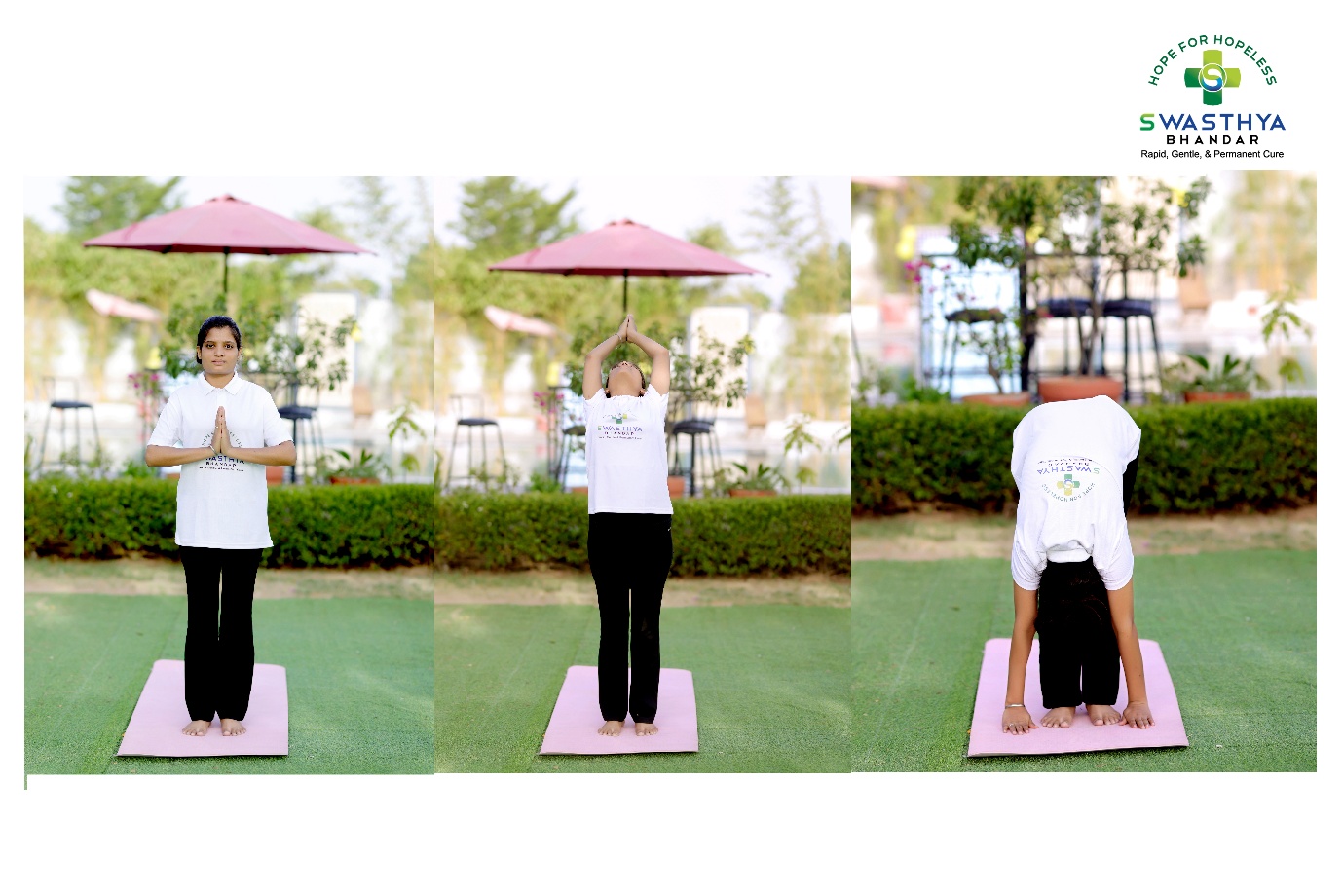
Surya Namaskar (Sun Salutation)
1. Method of Practice: Pranamasana (Prayer Pose)
-
01
Stand at the front edge of your yoga mat with your feet together, ensuring that your body weight is distributed evenly on both feet. -
02
Expand your chest and keep your shoulders relaxed. -
03
Inhale and raise both arms sideways and overhead. -
04
Exhale and bring your palms together in front of your chest in the Namaste (Prayer) position.
2. Method of Practice: Hasta Uttanasana (Raised Arms Pose)
-
01
Inhale and raise your arms overhead, gently arching your upper body backward. -
02
Keep your arms close to your ears. -
03
Stretch your entire body upward, from your heels to the tips of your fingers, creating a gentle backward extension without straining the lower back.
3. Method of Practice: Hasta Padasana (Standing Forward Bend / Hand-to-Foot Pose)
-
01
Keeping your spine as straight as possible, exhale and bend forward from the hips. -
02
Completely exhale as you bring both hands down to the floor beside your feet. -
03
If you are unable to place your palms on the floor initially, you may slightly bend your knees. Once your palms are comfortably placed on the floor, gradually try to straighten your knees without forcing the movement. Top of Form Bottom of Form
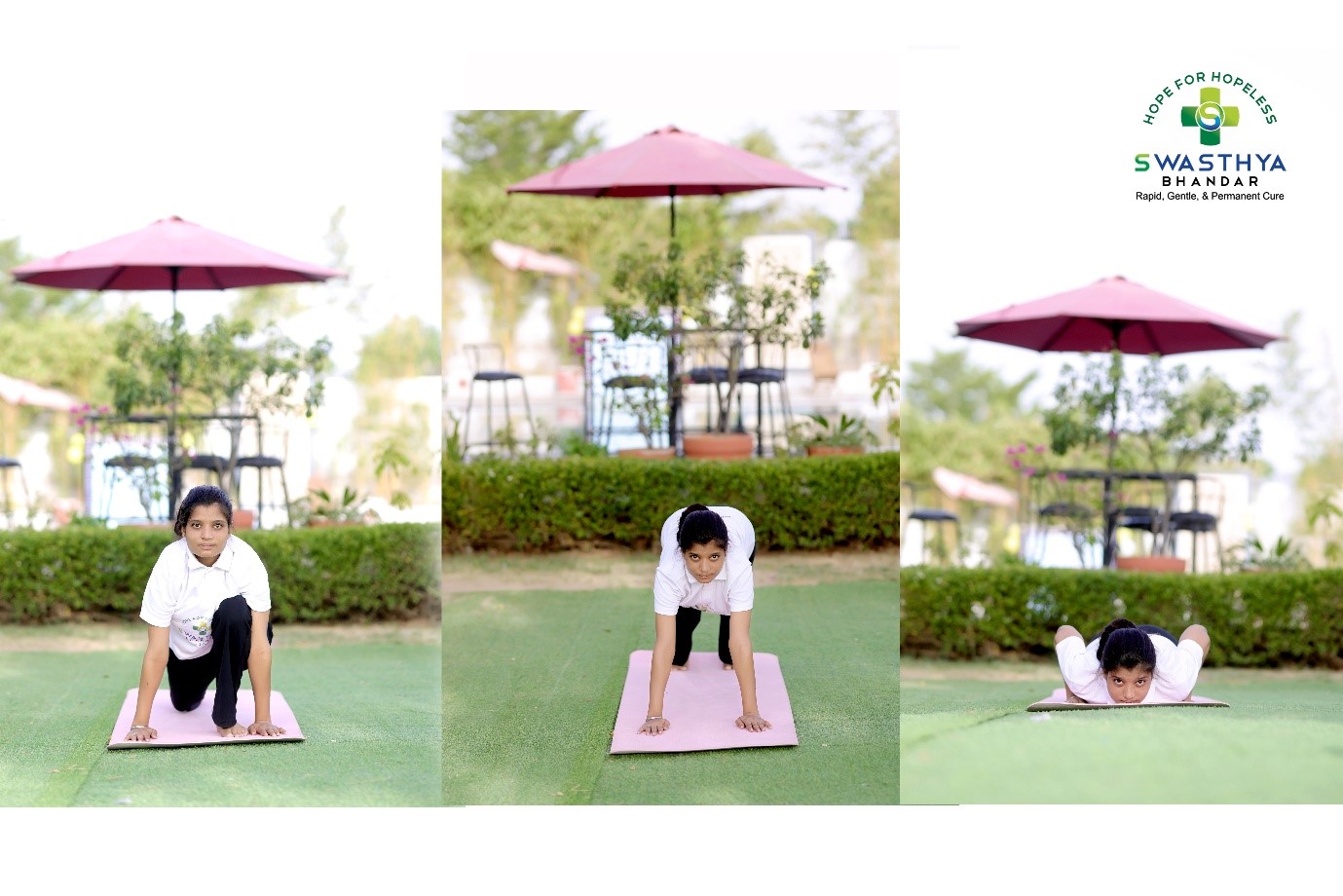
4. Method of Practice: Ashwa Sanchalanasana (Equestrian Pose / Low Lunge)
-
01
Inhale and take your right leg as far back as comfortably possible. -
02
You may place your right knee on the floor for support. -
03
Lift your chest, keep your spine elongated, and look upward. -
04
Ensure that your left foot remains positioned between your two palms, with the left knee aligned over the left ankle.
5. Method of Practice: Dandasana (Plank Pose)
-
01
Inhale and step your left foot back to join the right foot. -
02
Keep your entire body in a straight line from head to heels. -
03
Place your shoulders directly above your wrists, with your arms perpendicular to the floor. -
04
Engage your core muscles and avoid letting your hips sag or rise too high.
6. Method of Practice: Ashtanga Namaskara (Eight-Point Salute)
-
01
Exhale and gently lower both knees to the floor. -
02
Lift your hips slightly upward and backward. -
03
Slide your body forward, lowering your chest and chin to the floor. -
04
Keep your hips slightly elevated. -
05
In this position, eight points of the body touch the ground: both feet (toes), both knees, both palms, the chest, and the chin, while the hips remain slightly raised. Top of Form Bottom of Form
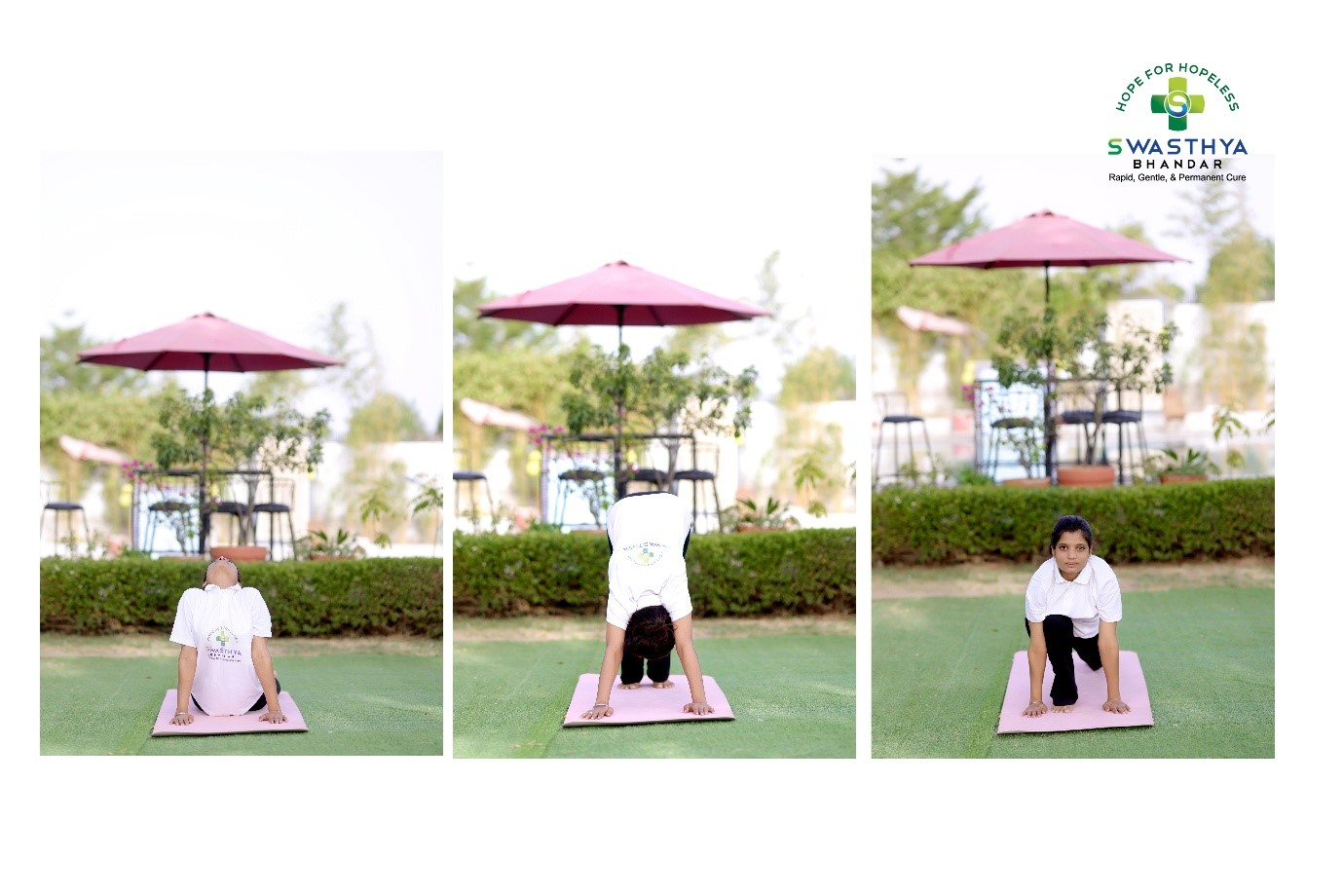
7. Method of Practice: Bhujangasana (Cobra Pose)
-
01
Glide your body forward and lift your chest into Bhujangasana (Cobra Pose). -
02
Keep your elbows slightly bent if necessary. -
03
Relax your shoulders away from your ears and look upward. -
04
Inhale and gently push your chest forward and upward, expanding the front of the body. -
05
Exhale and softly press your navel toward the floor while keeping the tops of your feet and toes firmly pressed into the mat.
8. Method of Practice: Adho Mukha Svanasana (Downward-Facing Dog Pose)
-
01
Exhale and lift your hips and lower back upward. -
02
Lower your chest toward your thighs, forming an inverted “V” (˄) shape with your body. -
03
Keep your arms and legs comfortably straight without straining. -
04
Press your palms and feet firmly into the mat and feel a deep stretch through the spine, shoulders, hamstrings, and calves. -
05
Breathe normally and maintain the posture comfortably.
9. Method of Practice: Ashwa Sanchalanasana (Equestrian Pose / Low Lunge)
-
01
Inhale and bring your right foot forward between your hands. -
02
You may place your left knee on the floor for support if needed. -
03
Keep your chest lifted, lengthen your spine, and look upward. -
04
Ensure that the front knee is aligned directly above the ankle for proper balance and stability. -
05
Note: In the traditional sequence of Surya Namaskar, if the right leg was taken back in Step 4, it is brought forward again in Step 9 before proceeding to the remaining steps. Top of Form Bottom of Form
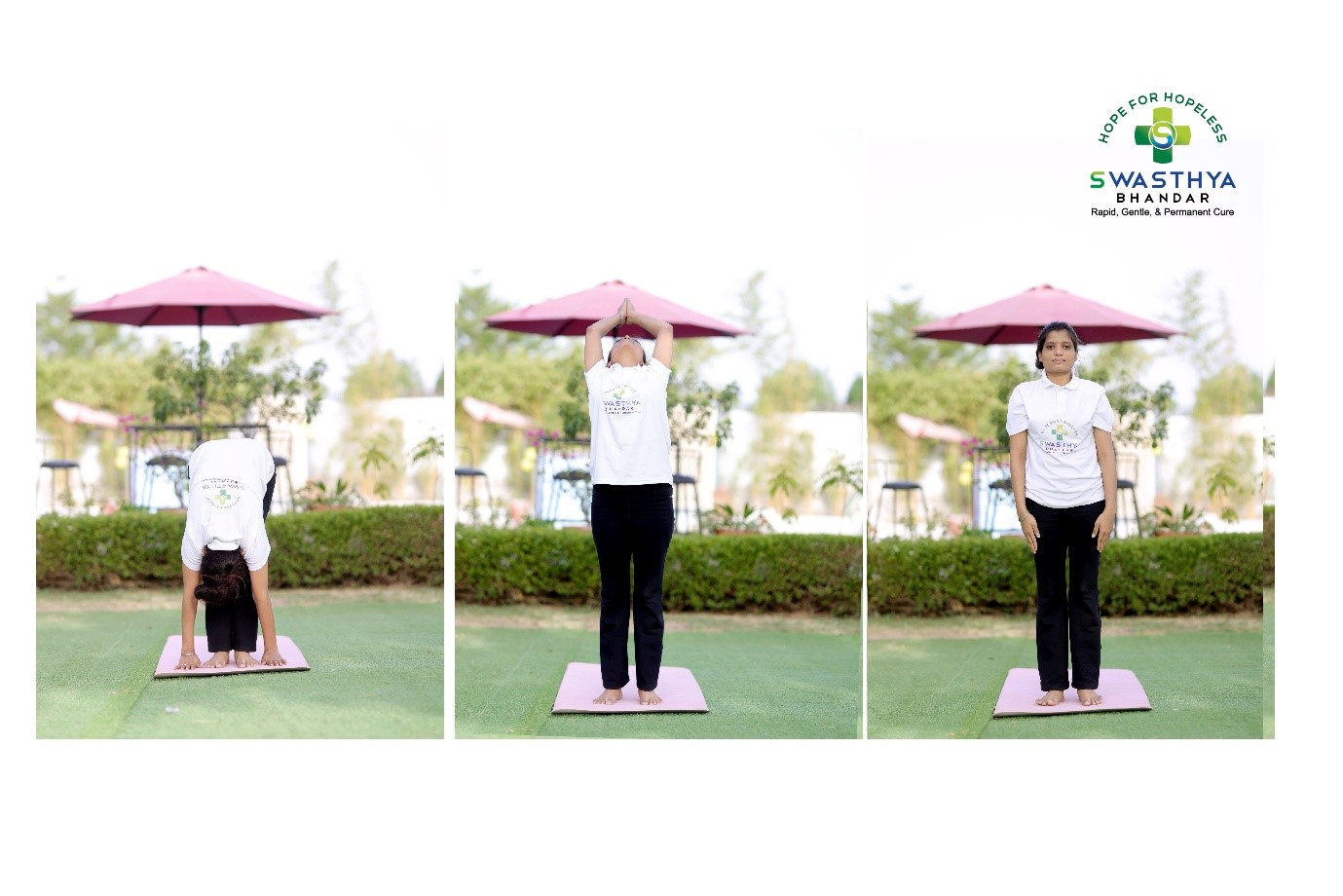
10. Method of Practice: Hasta Padasana (Standing Forward Bend / Hand-to-Foot Pose)
-
01
Exhale and bring your left foot forward to join the right foot, keeping your palms on the floor. -
02
If necessary, slightly bend your knees to maintain comfort and proper alignment. -
03
Gradually straighten your knees as much as your flexibility allows. -
04
Breathe normally and, if possible, try to bring your nose toward your knees without straining.
11. Method of Practice: Hasta Uttanasana (Raised Arms Pose)
-
01
Inhale and slowly roll your spine upward to an upright position. -
02
Raise your arms overhead and gently arch your upper body backward. -
03
Push your hips slightly forward while keeping your arms close to your ears and lengthening the entire body.
12. Method of Practice: Tadasana (Mountain Pose)
-
01
Exhale and first return your body to an upright position. -
02
Lower your arms gently alongside your body. -
03
Stand quietly in Tadasana, allowing your breathing to return to normal. -
04
Relax and become aware of the sensations throughout your body before beginning the next round.
Benefits of Surya Namaskar (Sun Salutation)
- Surya Namaskar is a dynamic sequence of 12 powerful yoga postures that provides a comprehensive workout for the entire body. Together, these postures engage more than 100 muscles, helping to build strength, improve flexibility, enhance balance, and increase overall stamina.
- Regular practice helps detoxify the body by improving blood circulation and stimulating the lymphatic system. It enhances skin health, promotes better posture, and improves the functioning of the cardiovascular, respiratory, digestive, musculoskeletal, nervous, and endocrine systems. The sequence also stimulates the endocrine glands, helping to maintain hormonal balance and improve metabolic efficiency.
- Surya Namaskar calms the mind, reduces mental fatigue, and enhances emotional well-being by promoting the release of endorphins (the body’s natural “feel-good” hormones). It strengthens immunity by stimulating lymphatic circulation and supports overall physical and mental health. Regular practice improves digestion, assists in weight management, increases flexibility, enhances energy levels, and relieves stress.
Contraindications
- Practice Surya Namaskar only under the guidance of a physician or qualified yoga therapist if you have: Uncontrolled high blood pressure
- Heart disease
- Severe arthritis
- Slipped (herniated) disc
- Acute back pain or spinal injury
- Recent surgery
- Severe osteoporosis
- Advanced pregnancy (unless modified appropriately under expert supervision)
- Discontinue the practice immediately if you experience chest pain, severe breathlessness, dizziness, or sharp pain during any posture. Beginners should learn the sequence under the supervision of a qualified yoga instructor. Top of Form Bottom of Form
Need Expert Guidance?
Our yoga experts are here to help you practice correctly and safely for maximum benefits.
Book an Appointment