
TRIKONASANA
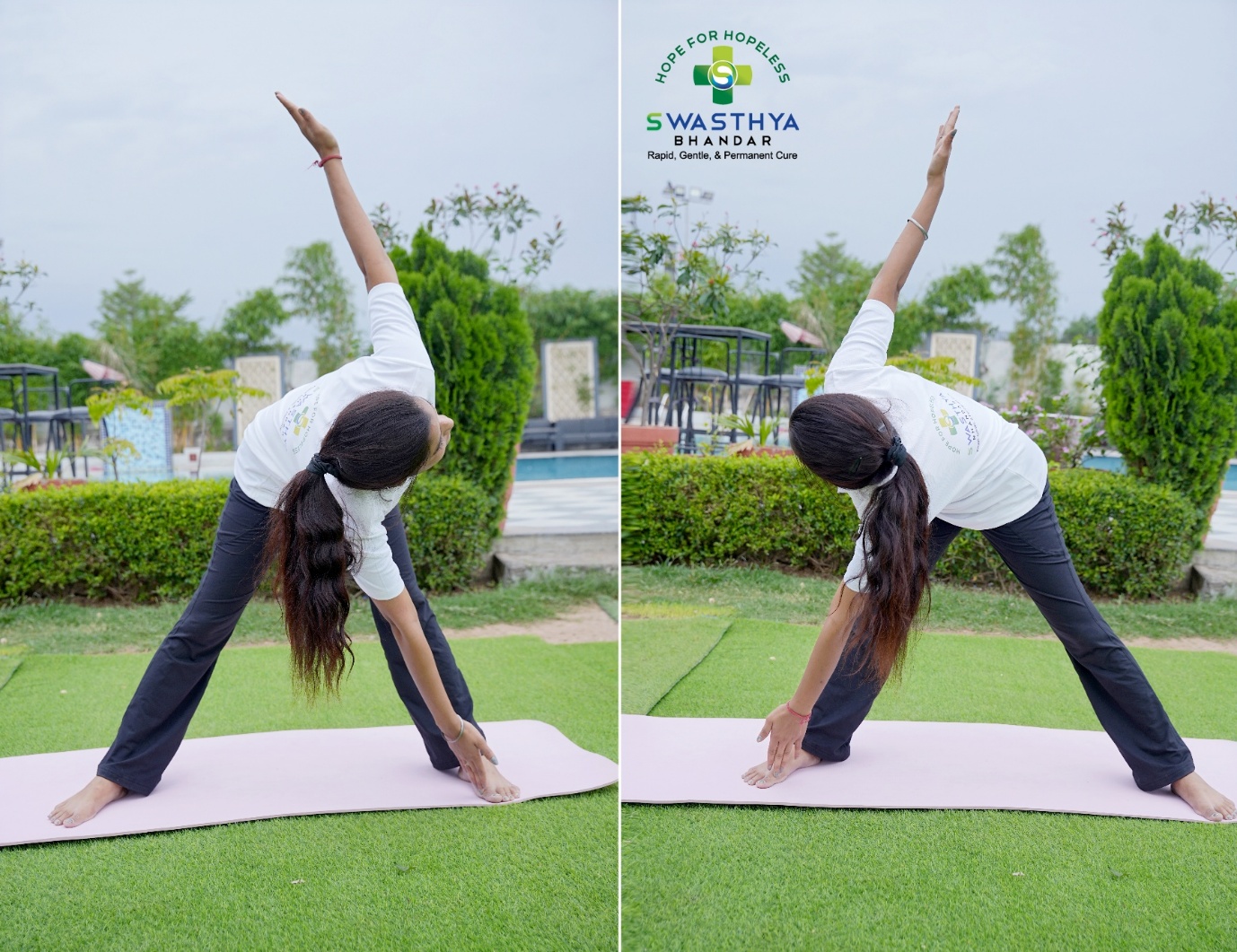
Method of Practice: Trikonasana
-
01
Stand upright with your feet about 3 feet apart. -
02
Inhale slowly and raise both arms sideways until they are at shoulder level, parallel to the floor. -
03
Turn your right foot outward to the right. -
04
Exhale and slowly bend your trunk to the right, placing the fingertips of your right hand on the floor just behind your right foot, or as close to the foot as comfortably possible. -
05
Extend your left arm vertically upward, keeping it in a straight line with the right arm. -
06
Turn your head and gaze at the tip of the middle finger of your left hand. -
07
Hold the posture for 10–30 seconds, breathing normally. -
08
Inhale and slowly return to the starting position. -
09
Repeat the same sequence on the left side. -
10
Practice 5–10 rounds on each side.
Benefits of Trikonasana
- Trikonasana is a classical standing posture that strengthens the muscles of the legs, knees, ankles, arms, and chest while providing an excellent stretch to the hips, thighs, calves, shoulders, and spine. It enhances spinal flexibility, improves posture, and increases balance and coordination.
- The gentle twisting and lateral stretching of the trunk stimulate the abdominal organs, helping relieve constipation and digestive disorders. It also helps reduce excess fat around the waist and hips, improves circulation, and enhances overall body flexibility.
- Regular practice calms the mind, reduces stress, anxiety, and mental fatigue, and promotes emotional balance and mental equilibrium.
Therapeutic / Supportive Uses For
- This asana is particularly beneficial for lower back pain, sciatica, digestive disorders, obesity, and osteoporosis.
- It may also serve as a supportive practice in improving metabolism, and in the management of diabetes, stress, anxiety, and cardiovascular diseases.
Contraindications
- Avoid practicing Trikonasana if you have: Severe migraine
- Acute neck or back injury
- Uncontrolled low or high blood pressure
- If you experience dizziness or have epilepsy, perform the posture while looking toward the floor instead of upward to minimize the risk of losing balance.
- Individuals with severe spinal disorders, recent surgery, osteoporosis with fracture risk, or balance impairment should practice this posture only under the supervision of Physician or a qualified yoga instructor. Top of Form Bottom of Form
Need Expert Guidance?
Our yoga experts are here to help you practice correctly and safely for maximum benefits.
Book an Appointment