
VIPRIT KARNI
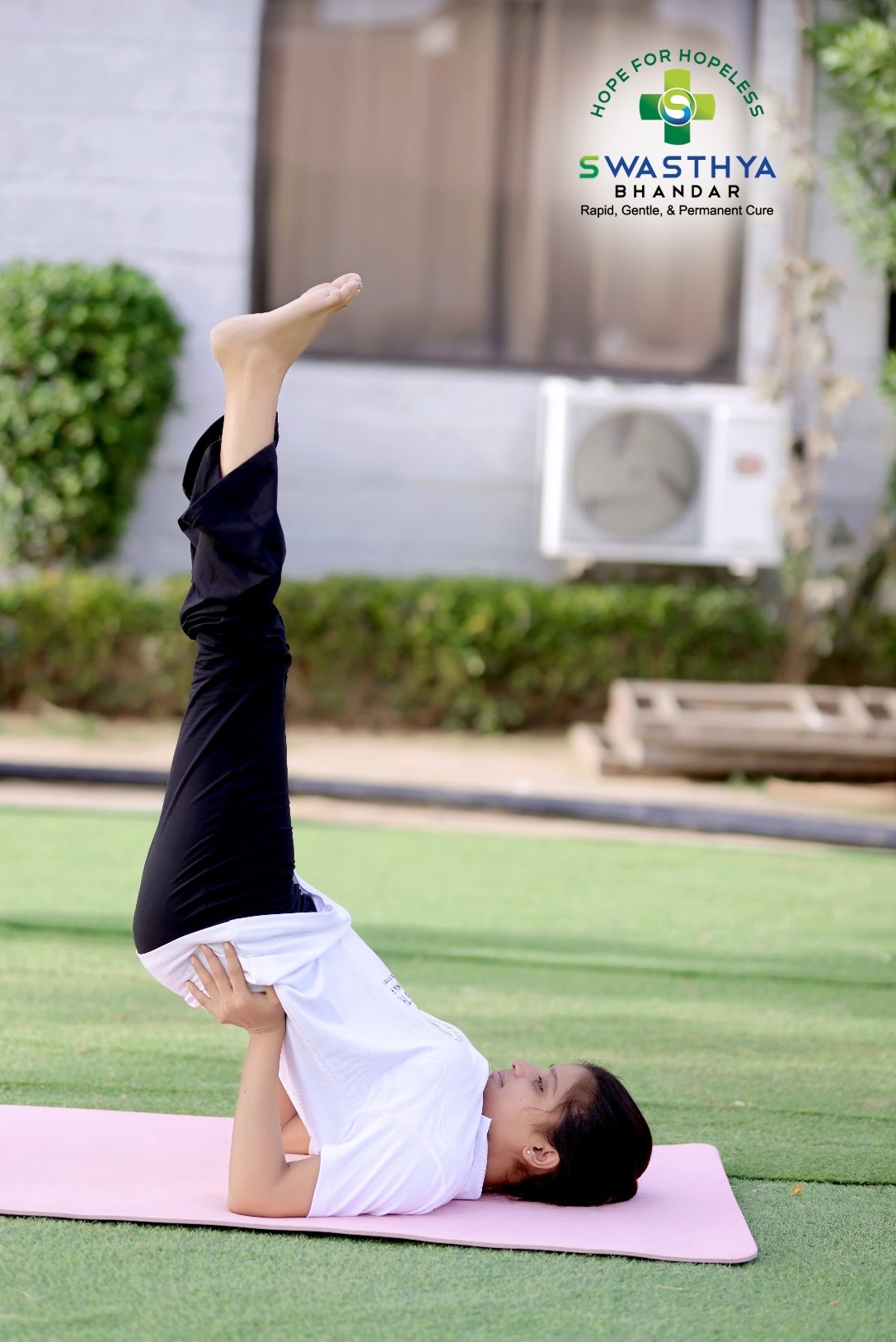
Method of Practice
- Lie flat on your back and raise both legs to a 90-degree angle.
- You may also perform this pose using a wall for support. To do this, sit with your right hip close to the wall, then lie back and extend both legs straight up against the wall.
- Support your lower back with your hands and gently lift your hips so that your torso forms approximately a 45-degree angle with the floor. Breathe normally and hold the posture for a comfortable duration.
- To come out of the pose, bend your knees toward your chest, slowly lower your hips, and return to the starting position.
- Repeat 3–5 times.
- If you experience discomfort in the lower back, place a folded blanket or cushion under your hips for support.
Benefits of Viparita Karani (Legs-Up-the-Wall Pose)
- Activates the parasympathetic nervous system, promoting deep relaxation.
- Improves venous return, enhancing blood flow from the legs back to the heart.
- Supports the health of the spine and helps relieve lower back discomfort.
- Improves digestion.
- Reduces leg swelling and fatigue caused by prolonged standing or sitting.
- Calms and rejuvenates the nervous system.
Contraindications
Do not perform this pose, or practice it only under the guidance of a doctor or qualified yoga expert, if you have:
- High blood pressure.
- Heart disease.
- Severe back pain.
- Cervical spine disorders or neck problems.
- Hernia.
- Cataracts or glaucoma.
- During menstruation.
- During pregnancy.
Therapeutic / Supportive Uses For
- This asana is particularly beneficial for varicose veins, back and lower back pain, thyroid disorders, menstrual pain and cramps, menopausal mood swings, insomnia, fatigue, and swollen legs.
- It also serves as a supportive practice in the management of low blood pressure, mild stress and depression, migraine and headaches, gas, constipation, and bloating.
Need Expert Guidance?
Our yoga experts are here to help you practice correctly and safely for maximum benefits.
Book an Appointment