
VRIKSHASANA
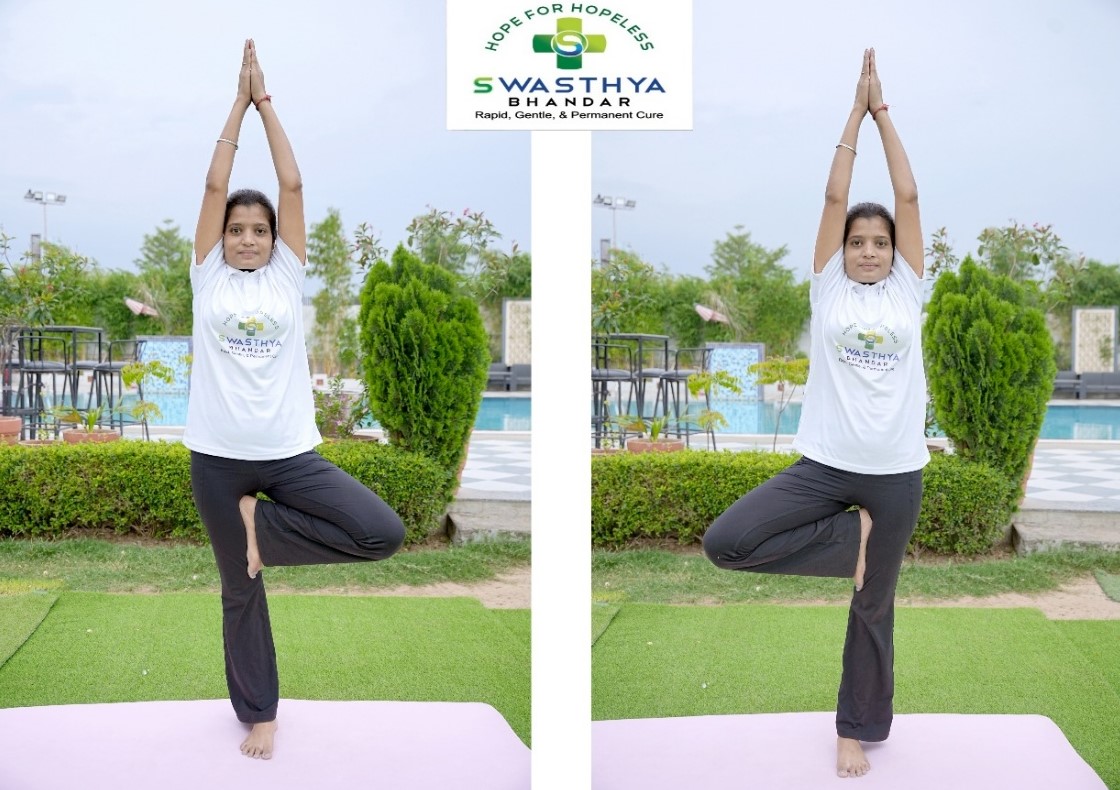
Method of Practice: Vrikshasana (Tree Pose)
-
01
Stand upright with your feet about 2 feet apart. -
02
Fix your gaze on a stationary point in front of you to help maintain balance. -
03
Exhale, bend your right knee, and place the sole of your right foot against the inner left thigh, with the heel resting close to the perineum (Mooladhara region). Avoid placing the foot directly on the knee joint. -
04
Inhale and raise both arms in front of your chest, bringing your palms together in Namaste (Prayer) position. -
05
Hold the posture for about 10 seconds, breathing normally while maintaining your balance. -
06
Exhale and slowly lower your hands. Gently bring your right foot back to the floor and return to the starting position. -
07
Repeat the same sequence with the left foot.
Benefits of Vrikshasana (Tree Pose)
- Vrikshasana is an excellent balancing posture that improves overall body balance, coordination, and postural stability.
- It strengthens and tones the muscles of the feet, ankles, calves, thighs, hips, pelvis, and spine, while improving body alignment and neuromuscular coordination.
- The posture enhances concentration, mental focus, and body awareness, making it particularly effective in reducing mental distractions and improving emotional stability.
- It also strengthens the pelvic region and may help relieve mild sciatica by improving muscular support around the hips and lower back.
Therapeutic / Supportive Uses For
- This asana is particularly beneficial for flat feet, sciatica, strengthening the calves, thighs, ankles, and spine, and reducing mental stress and anxiety.
- It may also serve as a supportive practice in the management of heart disease, varicose veins, and insomnia.
Contraindications
- Practice Vrikshasana only under the guidance of a physician or qualified yoga therapist if you have: Migraine
- Uncontrolled high or low blood pressure
- Frequent dizziness or vertigo
- Significant balance disorders
- Recent lower-limb injury or surgery
- Individuals with insomnia may practice this posture gently, but if prolonged balancing increases fatigue or discomfort, it should be modified appropriately.
- Beginners or those with poor balance may use a wall or chair for support until adequate stability is achieved.
Need Expert Guidance?
Our yoga experts are here to help you practice correctly and safely for maximum benefits.
Book an Appointment