
PRINCIPLES OF HEALTH PROTECTIVE DIET
The effect of whatever we
eat and drink our health is inevitable. The effects of contaminated or infected food
appear quickly, often resulting in vomiting, stomach pain, diarrhoea,
intestinal inflammation, and similar ailments within a short time. However, the
harmful consequences of incompatible, indigestible, unhealthy, unbalanced, or
untimely eating habits are usually not immediate. Instead, they develop
gradually over time and eventually manifest as chronic, serious, and
lifestyle-related diseases.
The only effective way to
prevent such diseases is to adopt healthy eating habits and a healthy
lifestyle. In this article, we will discuss some essential aspects of
health-promoting and health-protective dietary habits.
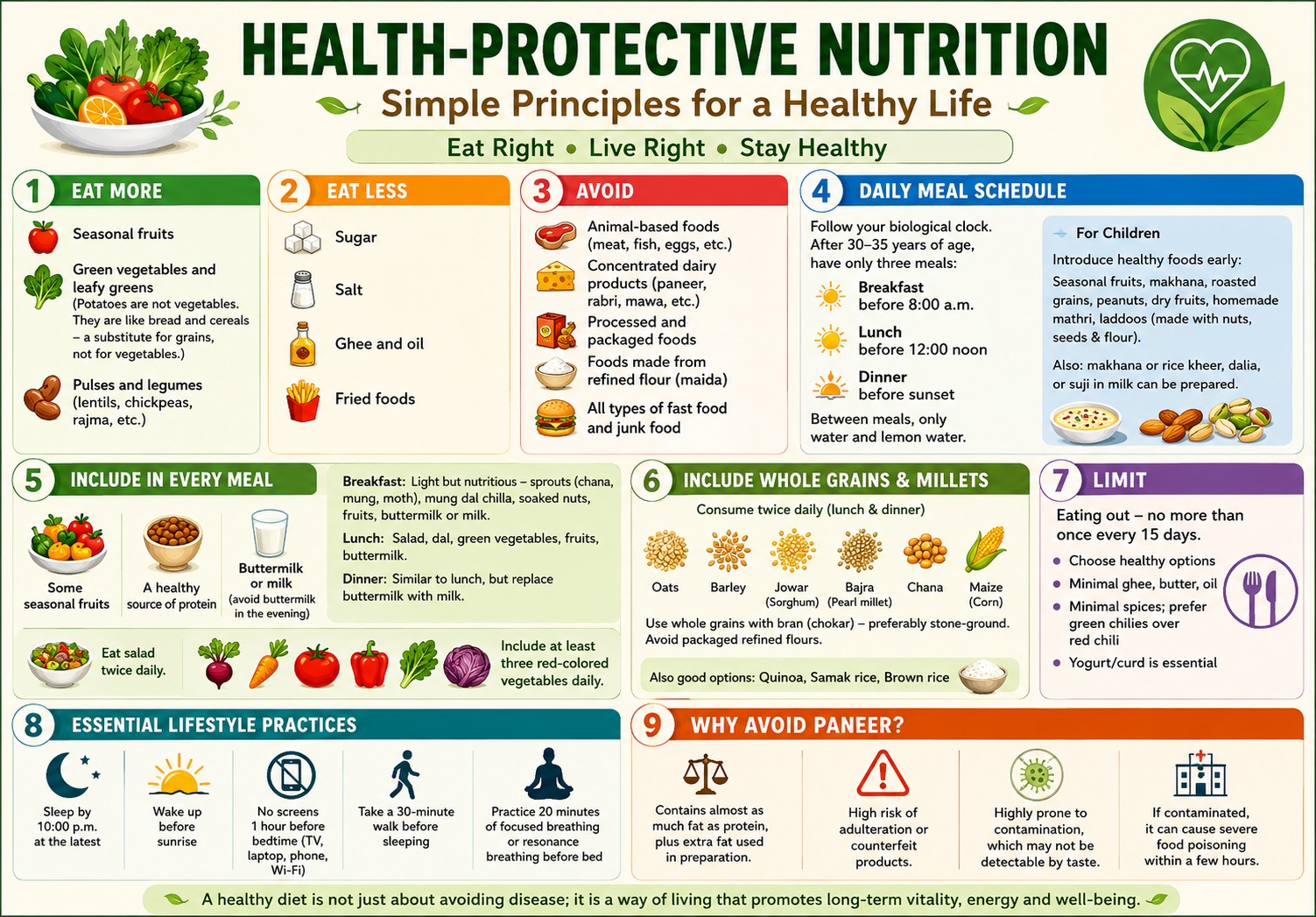
1. What to Eat More
a. Seasonal Fruits
b. Green Vegetables and Leafy Greens
(Remember: Potatoes
are not vegetables in the nutritional sense. Their properties are similar to
those of grains and bread, making them a substitute for cereals rather than for
vegetables.)
c. Pulses and Legumes
Such as lentils,
chickpeas, kidney beans, etc.
2. What to Eat Less Of
a. Sugar
b. Salt
c. Ghee and Oils
d. Fried Foods (Not just less but very, very little.)
3. What to Avoid
a. Animal-Based Foods
(Meat, fish, eggs, etc.)
b. Concentrated Dairy Products (Paneer, rabri,
khoa/mawa, etc.)
c. Processed and Packaged Foods
d. Foods Made from Refined Flour (Maida)
e. All Types of Fast Food and Junk Food
f. Carbonated Drinks ,
and Alcoholic Drinks.
4. Daily Meal Schedule
Follow your biological
clock. After the age of 30–35 years, limit yourself to three meals a day:
a. Breakfast Before 8:00 AM
b. Lunch Before 12:00 Noon
c. Dinner Before Sunset
Between meals, consume nothing
except water or lemon water.
For Children
Young children need more frequent meals should be encouraged
from an early age to eat:
- Seasonal fruits
- Fox nuts (makhana)
- Roasted grains (roasted chickpeas, pearl
millet, sorghum, puffed rice, flattened rice, sand-roasted popcorn, etc.)
- Peanuts
- Dry fruits and nuts
- Homemade whole-wheat savory snacks (mathri)
- Seeds
- Homemade laddoos made from flour, seeds, and
dry fruits
In addition, one may
prepare and keep ready:
- Makhana kheer
- Rice pudding
- Porridge (dalia)
- Semolina cooked in milk (thin or semi-solid
consistency)
5. Include in Every
Meal
a. Some Seasonal Fruits
b. A Healthy Source of
Protein
c. Buttermilk or Milk (Avoid
buttermilk in the evening.)
Suggested Meal
Composition
Breakfast: Light but
nutrient-dense –
- Sprouted chickpeas, green gram, or moth beans
- Moong dal chilla
- Soaked dry fruits and nuts
- Seasonal fruits
- Buttermilk or milk
Lunch:
- Salad
- Lentils
- Green vegetables
- Fruits
- Buttermilk
Dinner:
- Similar to lunch, but replace buttermilk with
milk.
Additional
Recommendations
- Eat salad twice daily.
- Include at least three red-colored vegetables
regularly, such as:
- Beetroot
- Red or yellow carrots
- Tomatoes
- Red bell peppers
- Amaranth greens
- Red cabbage (during winter)
6. Include Whole
Grains and Millets
Consume them twice daily
(at lunch and dinner).
Examples:
- Oats
- Barley
- Sorghum (Jowar)
- Pearl millet (Bajra)
- Chickpeas
- Maize
- Quinoa , Barnyard millet rice (Samak rice) , Brown
rice
Use whole grains with
bran intact and prefer freshly stone-ground flour over packaged flour,
which contains chemical additives .
7. Limit Eating Out
- Restrict restaurant or outside food to once
every 15 days.
- Even then, choose healthier options.
- Request customisation :
- Minimal ghee, butter, and oil
- Minimal spices
- Ggreen chilies instead of red chili powder
- Whenever eating out, positively Include curd with meal.
8. Essential Lifestyle
Practices
- Sleep by 10:00 PM at the latest.
- Wake up before sunrise.
- Turn off all screens (TV, laptop, mobile phone,
Wi-Fi) at least one hour before bedtime.
- Take a 30-minute walk before sleeping.
- Practice 20 minutes of focused breathing or
resonance breathing before bedtime.
9. Why Avoid Paneer?
- Although paneer contains about 18–20%
protein, it also contains approximately 25–27% fat, making it
potentially more harmful than beneficial.
- Additional fat is often added during cooking.
- There is abundant chance of chemical laded artificial paneer.
- It is heavy to digest and may contribute to
constipation.
- It is highly susceptible to bacterial
contamination, which may not always be detectable by taste. If
contaminated, it can cause severe food poisoning within a few hours.
10. Why Avoid
Non-Vegetarian Foods?
- Rich in saturated fats and cholesterol,
which contribute to arterial
blockage and cardiovascular diseases.
- Associated with an increased risk of certain
cancers according to various health organizations, including the World
Health Organization.
- Linked to a higher risk of developing type 2
diabetes.
- May contribute to bloating, gas, acidity, and
constipation in some individuals.
- Carries a risk of food-borne infections and
food poisoning.
- Like app vegetarian animals we have been
awarded with molar teeth , and not with canine teeth like non veg animals .
Thus nature’s mandate for us is to be vegetarian only, and disobeying nature results in diseases .
Conclusion
A health-protective diet
is based on natural, minimally processed foods, abundant fruits and vegetables,
whole grains, legumes, regular meal timings, and a disciplined lifestyle.
Consistently following these principles is the key to keep away from chronic lifestyle-diseases and promote
long-term health and well-being.
Top of Form
Bottom of Form